Lisbon, Portugal

Catholic University of Portugal
Lisbon, Portugal

Cost Of Living

The Catholic University of Portugal distinguishes itself through its combination of humanistic education, research and innovation, internationalisation and social responsibility. Its educational model is grounded in Christian humanism while emphasising academic excellence, freedom of thought, respect for diversity and ethical responsibility. UCP has a strong research orientation, with interdisciplinary research addressing social, scientific, technological and sustainability challenges, and it actively develops partnerships with business, industry, cultural and social organisations. Its international profile is another distinctive feature, with joint and double-degree programmes, English-taught programmes, international mobility agreements and students from more than 100 countries.
A further strength is its multi-campus national presence, with major academic centres in Lisbon, Porto, Braga and Viseu, allowing the University to combine regional engagement with international academic networks. UCP also reports 15 research units, 139 study cycles, more than 800 mobility protocols and over 3,500 international students, reflecting its broad academic and global orientation.
Portuguese banker and former chief executive of Lloyds Banking Group; he studied Management and Business Administration ... View More
Portuguese banker and former chief executive of Lloyds Banking Group; he studied Management and Business Administration at UCP and received an honorary doctorate from the university in 2022. View Less
Portuguese lawyer and politician who studied at UCP; he has served in senior public offices, including as Prime Minister... View More
Portuguese lawyer and politician who studied at UCP; he has served in senior public offices, including as Prime Minister of Portugal. View Less
Portuguese politician, journalist and former Deputy Prime Minister and Minister of Foreign Affairs; he is listed among U... View More
Portuguese politician, journalist and former Deputy Prime Minister and Minister of Foreign Affairs; he is listed among UCP's alumni. View Less
Portuguese lawyer, academic and politician; he is an alumnus of UCP and has held European and national political positio... View More
Portuguese lawyer, academic and politician; he is an alumnus of UCP and has held European and national political positions. View Less
Portuguese economist and former Minister of State and Finance; he is listed among UCP's alumni.
Portuguese comedian, writer and television personality, and a UCP alumnus.
The Lisbon Campus of the Catholic University of Portugal (UCP) is centred on the 37,000 m² Palma de Cima Campus, which serves as the university’s headquarters. The campus consists of three main building complexes housing academic faculties, the João Paulo II University Library, Católica Lisbon School of Business & Economics and the university administration. Its infrastructure includes 11 auditoriums, classrooms, computer rooms, two studios, a nursing laboratory, libraries, restaurants, cafeterias and bars, a university bookshop, student services and a women’s residence.
The campus also provides specialised facilities such as a Thomson Reuters financial-data room with Eikon terminals, television and radio studios, open-access computer areas, self-service printing facilities and multiple spaces for academic events and conferences. The João Paulo II University Library provides physical and digital research resources, reference services, interlibrary loans and information-literacy support. Students also have access to academic, financial, social and pastoral support services on campus.
Student life at the Catholic University of Portugal’s Lisbon Campus combines academic, social, cultural, sporting and community activities. Students can participate in student associations, professional clubs, music groups, sports teams, volunteering and international activities. The Católica-Lisbon Students’ Union organises social events, sports activities and volunteering initiatives, while professional clubs provide opportunities to attend seminars, workshops, company events and networking activities. Students can also join musical groups such as the Católica-Lisbon Big Band, fado groups and traditional tunas.
The University also places emphasis on volunteering and social responsibility, with opportunities for students to participate in national and international volunteering programmes, including the FLY/VUELA summer service-learning initiative. For the 2026–27 academic year, UCP's Lisbon campuses have introduced a programme of welcome activities including volunteering, games, social events, faculty activities and welcome gatherings to help new students integrate into university life.


Catholic University of Portugal has dedicated Careers and Employability services that connect students and alumni with employers through career fairs, recruitment platforms, internships, workshops and mentoring. At the Porto campus, the annual RUMO Employability Event brings together employers from different sectors through company stands, recruitment lounges, networking sessions and discussions on current labour-market opportunities. In RUMO 2025, 68 companies participated across 76 stands, including organisations such as Deloitte, EY, KPMG, PwC, Danone, LG Electronics, Sonae MC and Voltalia.
At the Lisbon campus, career services include the Career Forum, Startup Fair and International Career Monday, while Católica-Lisbon School of Business & Economics provides employers with platforms to advertise internships and jobs, organise recruitment events, workshops, business-case sessions and job fairs, and interact directly with students and student clubs. Career offices also provide CV and interview preparation, personalised career counselling, mentoring and access to employment opportunities.
The below information is required while
completing the university application :
1. International students applying to undergraduate programmes at the Catholic University of Portugal (UCP) Lisbon Campus generally need to have completed a secondary school qualification that is equivalent to Portuguese secondary education or that grants access to higher education in their home country.
2. Applicants normally need to provide the relevant foreign secondary school final examination or an equivalent subject examination corresponding to the entrance examinations required for their chosen programme; alternatively, Portuguese national entrance examinations or, for some programmes, UCP specific admission examinations may be accepted.
3. For the 2026/27 intake, applicants with foreign secondary education generally need to submit their secondary school diploma and academic transcript, including subjects and grades, information on the grading scale and minimum passing grade, and the required certificate of equivalence to Portuguese secondary education where applicable.
4. Documents issued outside Portugal may need to be translated, authenticated or legalised according to their country of origin.
5. Applicants also submit identification and a passport size photograph through the online application system.
6. For Católica Lisbon's International Undergraduate Programmes, additional requirements apply.
7. Applicants are assessed through programme specific academic criteria and English language requirements; accepted English qualifications include IELTS 7.0 with no component below 6.0, Cambridge Advanced (CAE) grade C or above, or Aptis ESOL B2 or above.
8. A 350 500 word motivation letter and a CV are also required for these international programmes.
Know moreCatholic University of Portugal has dedicated Careers and Employability services that connect students and alumni with employers through career fairs, recruitment platforms, internships, workshops and mentoring. At the Porto campus, the annual RUMO Employability Event brings together employers from different sectors through company stands, recruitment lounges, networking sessions and discussions on current labour-market opportunities. In RUMO 2025, 68 companies participated across 76 stands, including organisations such as Deloitte, EY, KPMG, PwC, Danone, LG Electronics, Sonae MC and Voltalia.
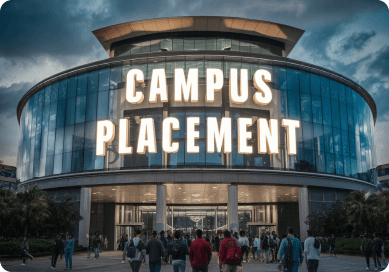
At the Lisbon campus, career services include the Career Forum, Startup Fair and International Career Monday, while Católica-Lisbon School of Business & Economics provides employers with platforms to advertise internships and jobs, organise recruitment events, workshops, business-case sessions and job fairs, and interact directly with students and student clubs. Career offices also provide CV and interview preparation, personalised career counselling, mentoring and access to employment opportunities.


The Catholic University of Portugal (UCP) has received several notable awards and achieved strong results in international rankings and research. In 2024, UCP won the Uniservitate Prize for Southern Europe for its Ser Cuida(I)doso service-learning project, selected from 311 applications worldwide. In 2024, UCP Rector Isabel Capeloa Gil was named Personality of the Year at the AmCham Tributes Awards for her contribution to Portugal–US relations. In 2025, UCP received two T4EU Awards recognising innovative pedagogical and digital-learning practices. The university was also recognised in the 2025 Redstone University Startup Index as the most entrepreneurial university in Portugal, while Católica Porto Business School became one of the Portuguese schools represented in the Financial Times global rankings of leading management master's programmes. In the QS World University Rankings 2026, UCP moved from the 901–950 band to 781–790 globally and was placed among Portugal's leading universities for internationalisation and employability indicators. Additionally, in 2025, UCP introduced its first Pedagogical Innovation Award to recognise innovative teaching practices, with three projects receiving the inaugural distinction.


UCP’s Católica Service-Learning (CApS) received the 1st UNISERVITATE Prize for Programmes to Institutionalise Service-Learning, recognising its institutional approach to integrating service-learning into university education.
UCP received two European T4EU Awards for innovation within the Transform4Europe Alliance. The recognised initiatives were Journalist meets Translator in the EFL/Translation Classroom under Digital Learning Technologies and Our Católica: A New Way of Working and Connecting under the Non-Academic Staff category.
UCP launched its first Pedagogical Innovation Award, recognising three joint-winning projects that introduced innovative, student-centred teaching practices in education, business and medicine.
UCP moved from the 901–950 global band to 781–790 in the QS World University Rankings 2026, with the university reporting strong national positions for international students, international diversity, international faculty and employability indicators.
UCP’s “Ser Cuida(I)doso” service-learning project won the Uniservitate Prize for the Southern Europe region, selected from 311 applications worldwide. The project was recognised for combining academic learning with community engagement.
Catholic University of Portugal (UCP) has an active research and innovation portfolio spanning biotechnology, food technology, health, sustainability, artificial intelligence and creative industries. In 2025, its Innovation Day showcased 10 research and innovation projects, including Skin4Skin, Freetilizer, CATALYSE, Tecmafoods, Simplyeast and AgroGrIN Tech, focusing on food sustainability, waste valorisation, digital quality control and functional ingredients for health. In 2025–2027, UCP is leading the EU-funded ELEVATE project, which integrates food biotechnology, biomedicine, AI, machine learning, arts, business and law to strengthen university entrepreneurship and develop knowledge-intensive solutions and start-ups. Also in 2025, researchers at UCP developed a patented sustainable method for extracting high-purity bromelain from pineapple by-products using mild and scalable processes; the technology was subsequently licensed to AgroGrIN Tech for industrial development. These initiatives demonstrate UCP’s emphasis on applied research, technology transfer and collaboration between researchers, industry and society.
Led by Católica-Lisbon School of Business & Economics, this European project focuses on strengthening university entrepreneurship and innovation capacity in areas including food biotechnology, biomedicine, artificial intelligence, arts and business.
UCP, in partnership with Galp, established this interdisciplinary centre bringing together business, biotechnology and law to explore technological innovation, sustainability, regulation and positive social and environmental impact.
A UCP research-based startup focused on producing sustainable, clean-label food ingredients from agricultural and food-processing by-products won first prize at the EIT Food Accelerator Network Paris hub, receiving €50,000 to accelerate development.
UCP’s Faculty of Biotechnology organised a practical innovation hackathon in which Biomedical Engineering students developed prototypes involving sensors, measurement systems and intelligent devices.
Researchers at UCP’s Centre for Biotechnology and Fine Chemistry worked on the valorisation of cereal by-products, developing products with nutritional and functional applications within the circular economy.
UCP launched the CARE to Innovate initiative to strengthen dialogue between its research community, industry and society and to promote knowledge transfer and innovation.

Embark on your educational journey with confidence! Our team of admission experts is here to guide you through the process. Book a free session now to receive personalized advice, assistance with applications, and insights into your dream school. Whether you're applying to college, graduate school, or specialized programs, we're here to help you succeed.
We use cookies to improve your experience, personalize content, and analyze traffic. By clicking 'Accept All,' you agree to our use of cookies.