
Fresenius University of Applied Sciences

Berlin, Germany

Fresenius University of Applied Sciences is one of Germany’s oldest and largest private universities of applied sciences, with a history dating back to 1848. Headquartered in Idstein, it operates multiple campuses across major cities such as Berlin, Cologne, Munich, Hamburg, and Frankfurt.
Add to compare
2

Tuition Fees, Cost of Living & Accommodation at Fresenius University of Applied Sciences

Cost Of Living

$ 11208

Undergraduate Fees International Students

$ 27000

Post Graduate Fees International Students

$ 18000

Bachelors

  • $ 27000
  • $ 27000
  • $ 27000
  • $ 27000

Fresenius University of Applied Sciences Departments

  • Business & Management
  • Computer Science
  • Science
  • Engineering

Unique Selling Proposition (USP) of Fresenius University of Applied Sciences

The unique selling proposition (USP) of Fresenius University of Applied Sciences lies in its strong blend of long academic tradition, practical learning, and industry alignment, making it a distinctive choice among private universities in Germany. With a history dating back to 1848, the university combines over 175 years of educational experience with a modern, future-oriented approach often described as a “Next Generation University”, adapting to trends like digitalisation, sustainability, and evolving job markets.

A key USP is its practice-oriented teaching model, where students engage in case studies, real company projects, internships, and industry-led sessions, ensuring they gain job-ready skills and hands-on experience alongside theoretical knowledge. The university also maintains strong industry connections, allowing students to interact with professionals, participate in applied research, and build networks that support employability. 

View More

Distinguished Alumni of Fresenius University of Applied Sciences

Infrastructure & Facilities at Fresenius University of Applied Sciences

The infrastructure at Fresenius University of Applied Sciences is modern, flexible, and spread across multiple campuses in major German cities such as Berlin, Cologne, Munich, Hamburg, and Frankfurt. The university offers state-of-the-art classrooms, well-equipped lecture halls, and specialized laboratories (especially for fields like chemistry, biology, and health sciences), ensuring strong practical learning environments. Many campuses feature multifunctional and modern facilities, including student learning centers, academic and career support offices, and digital learning platforms. In certain locations, such as Frankfurt, students even study in industry-linked environments like hospitals or research centers, enhancing real-world exposure. The university also provides a range of student-focused infrastructure and services, including campus security, mental health services, international student support centers, mentoring programs, and spaces for social and cultural activities. Additionally, its campuses are located in central urban areas, offering easy access to transport, cultural hubs, and industry networks, which further enriches the learning experience. 

View More

Fresenius University of Applied Sciences Student Life

Student life at Fresenius University of Applied Sciences is vibrant, diverse, and centered around a close-knit and supportive community. The university emphasizes a personal and friendly atmosphere, with small class sizes that allow students to build strong relationships with classmates, lecturers, and staff, creating a sense of belonging often described as the “FreseFamily.” Students benefit from an interactive and practice oriented learning environment, where collaboration, group work, and real world projects are common, helping them develop both academic and social skills. Campus life is enriched by a variety of events and extracurricular activities, including movie nights, cultural evenings, language exchange programs, workshops, and guest lectures, reflecting the university’s international environment. Students also have opportunities to participate in field trips, networking events, and skill-building workshops through platforms like StudyPLUS, enhancing both personal growth and career readiness. 


View More

Fresenius University of Applied Sciences Career support

Campus recruitment at Fresenius University of Applied Sciences is structured around strong industry integration, career services, and continuous employability support rather than only final-year placements. The university has a dedicated Career Development and Placement system that prepares students through workshops, internships, and employer engagement activities, ensuring they are industry ready before graduation. A key feature is its practice oriented curriculum, where internships and real world projects are often embedded into study programmes. This allows students to gain hands-on experience and build professional networks early, which significantly improves employability outcomes. The university regularly organises career fairs, networking events, and company presentations, connecting students directly with recruiters from sectors such as business, healthcare, media, and technology. Fresenius maintains strong corporate links with national and international companies, enabling opportunities for internships, working student roles, and graduate jobs. Like many German universities of applied sciences, recruitment is often decentralised and continuous, meaning students secure positions through internships, thesis collaborations, and direct applications rather than relying solely on a single campus placement season.

View More

Step-by-Step Guide to Admission Requirements at Fresenius University of Applied Sciences

1. The undergraduate application requirements for international students at Fresenius University of Applied Sciences include meeting academic, language, and documentation criteria.

2. Applicants must hold a recognized school leaving certificate (such as Class 12 or equivalent) that is comparable to the German Abitur or Fachhochschulreife.

3. Depending on the program, students must demonstrate language proficiency typically a minimum B2 level in English (e.g., IELTS 6.0 or TOEFL iBT 70) for English taught courses, or B2 level German for German taught programs.

4. Required documents generally include academic transcripts, certificates, proof of language proficiency, a CV, and a passport copy.

5. The admission process involves submitting an online application, uploading documents, and attending a short interview, after which an admission decision is communicated. 

Know more
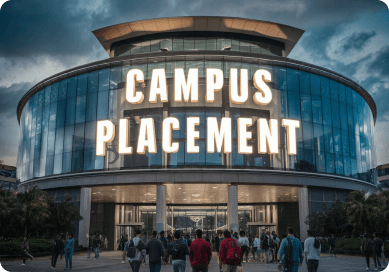
Campus
Recruitment By top Companies

Campus recruitment at Fresenius University of Applied Sciences is structured around strong industry integration, career services, and continuous employability support rather than only final-year placements. The university has a dedicated Career Development and Placement system that prepares students through workshops, internships, and employer engagement activities, ensuring they are industry-ready before graduation.

A key feature is its practice-oriented curriculum, where internships and real-world projects are often embedded into study programmes. This allows students to gain hands-on experience and build professional networks early, which significantly improves employability outcomes. The university regularly organises career fairs, networking events, and company presentations, connecting students directly with recruiters from sectors such as business, healthcare, media, and technology.

Fresenius maintains strong corporate links with national and international companies, enabling opportunities for internships, working student roles, and graduate jobs. Like many German universities of applied sciences, recruitment is often decentralised and continuous, meaning students secure positions through internships, thesis collaborations, and direct applications rather than relying solely on a single campus placement season.

View More

    Notable Achievements of Fresenius University of Applied Sciences

    Fresenius University of Applied Sciences has achieved several recognitions that reflect its academic quality and innovation-driven approach. In 2010, the university received its first institutional accreditation from the German Council of Science and Humanities, marking a major milestone in quality assurance. This recognition was further strengthened in 2021, when the same council extended its accreditation and a distinction granted to only a limited number of private universities, highlighting strong institutional trust and academic standards. In 2015, the university achieved system accreditation, allowing it to independently accredit its own study programmes under a recognised quality framework. More recently, in 2023, it demonstrated innovation in teaching by receiving the Fresenius Teaching Award for a virtual reality-based learning project aimed at enhancing digital education. Additionally, the university continues to gain recognition for its long-standing legacy (since 1848) as one of the oldest institutions in applied chemistry education, along with its consistent emphasis on practice-oriented teaching, interdisciplinary research, and industry collaboration, which remain key achievements shaping its reputation today. 

    View More

    Achievements

    01.
    Institutional Accreditation

    Received official institutional accreditation from the German Council of Science and Humanities, confirming the university’s academic quality and standards.

    Year
    2010

    Notable Innovation, Research & Development Fresenius University of Applied Sciences

    Notable innovations, research, and development at Fresenius University of Applied Sciences reflect its long-standing focus on applied, industry-oriented research across multiple disciplines. Since its founding in 1848 as a chemical laboratory, the institution has maintained a strong tradition in applied scientific research, particularly in chemistry and life sciences. In the 2010s present, the university expanded into interdisciplinary research spanning business, health, media, and design, emphasising practical problem solving and collaboration with industry partners. From 2021 onwards, it has advanced digitalisation and flexible learning innovations, integrating blended learning and modern teaching technologies. A major milestone includes participation in the INSPIRE EU Project (2023 2027), a large scale initiative focused on reducing plastic pollution in rivers through environmental research and innovation. In 2024 2025, the university contributed to the Promentia VR project, developing virtual reality solutions to improve the well-being of dementia patients, alongside the vrDIP project (2024 present), which explores VR applications for education and social integration. Additionally, ongoing research in its design faculty continues to drive creative and artistic innovation in media and fashion. Overall, Fresenius University’s research profile is characterised by applied innovation, interdisciplinary collaboration, and real-world impact, particularly in sustainability, healthcare, digitalisation, and creative industries.

    View More

    Notable Innovation

    01.
    Promentia VR Healthcare Innovation Project

    Development of a modular virtual reality (VR) system aimed at improving the quality of life for dementia patients through multisensory stimulation and personalised digital therapy tools.

    Year
    2024
    02.
    VR Digital Integration Project

    Research and innovation in virtual reality applications for social integration and education, showcased at major digital innovation platforms, highlighting the role of immersive technology in societal development.

    Year
    2024
    03.
    INSPIRE EU Research Project

    Participation in the EU-funded INSPIRE project, involving 26 partners and ~€10 million budget, focusing on reducing plastic pollution in European rivers through innovative environmental technologies and research on microplastics such as tyre wear.

    Year
    2023

    Explore Programs & Courses at Fresenius University of Applied Sciences

    Program name
    Tuition Fees
    Deadlines
    Computer Science (B.Sc.) 3 Years On Campus Bachelors Program
    NA
    NA
    BA Tourism, Hotel and Event Management 3 Years On Campus Bachelors Program
    NA
    NA

    Connect With Fresenius University of Applied Sciences

    Book Free Session with Our Admission Experts

    Admission Experts