
Grenoble, France

Grenoble, France

Cost Of Living

Undergraduate Fees International Students

Post Graduate Fees International Students


The USP of INSA Strasbourg lies in its rare combination of engineering excellence, architectural education, and strong European integration, making it one of the most distinctive technical institutions in France. A key USP is that INSA Strasbourg is the only engineering school in France that also offers a full architecture degree, allowing students to pursue a unique dual pathway that integrates technical engineering skills with creative architectural design. This interdisciplinary approach enables graduates to work across construction, urban planning, and design sectors with a broader skill set than traditional engineering or architecture programs. INSA Strasbourg also stands out for its close industry integration and excellent employability outcomes. The school maintains long-standing partnerships with companies, offers internships, R&D collaborations, and business forums, with graduates typically securing employment very quickly after completing their studies. In addition, the institution emphasizes applied research and innovation, supported by multidisciplinary research units and collaborations with organizations like the University of Strasbourg and CNRS, focusing on areas such as robotics, energy, materials, and sustainable development.
A prominent French politician who served as President of the Languedoc-Roussillon Regional Council. He is one of the few... View More
A prominent French politician who served as President of the Languedoc-Roussillon Regional Council. He is one of the few widely cited notable alumni associated with INSA Strasbourg (formerly ENSAIS). View Less
A distinguished engineering alumnus who became CEO of a major construction company (Albizati Père et Fils) and held lea... View More
A distinguished engineering alumnus who became CEO of a major construction company (Albizati Père et Fils) and held leadership roles such as President of the regional construction federation and member of economic councils in France. View Less
An early graduate recognized within alumni records for contributions in engineering and industrial development (details ... View More
An early graduate recognized within alumni records for contributions in engineering and industrial development (details mainly documented within alumni networks). View Less
A more recent alumnus (2012, plastics engineering) who works as a product engineer and has contributed to innovation in ... View More
A more recent alumnus (2012, plastics engineering) who works as a product engineer and has contributed to innovation in sports equipment design and industrial product development. View Less
The infrastructure at INSA Strasbourg is modern and industry-oriented, designed to support both engineering and architecture education within a single campus. Located on the Esplanade university campus in the heart of Strasbourg, the institute provides a well-connected and urban learning environment close to the city center. The campus includes specialized teaching buildings, lecture halls, and advanced laboratories, along with dedicated technological platforms used for practical training, experimentation, and product development in collaboration with companies. It also houses architecture studios, research units, and innovation spaces that support fields such as civil engineering, robotics, materials science, and photonics. INSA Strasbourg further benefits from shared facilities within the wider university ecosystem, including libraries, sports centers, and student services, creating a comprehensive academic and research infrastructure that encourages hands-on learning, interdisciplinary collaboration, and real-world application of knowledge.
Student life at INSA Strasbourg is vibrant, diverse, and closely connected to both campus activities and the dynamic environment of Strasbourg. The school has an active student union (BDE) and several associations that organize cultural events, clubs, and social activities throughout the year, allowing students to engage in music, arts, technology, and community initiatives. Strasbourg itself enhances student life with its international atmosphere, hosting around 45,000 students from over 150 nationalities and offering rich cultural, historical, and social experiences. Students at INSA benefit from a balanced lifestyle that includes sports, events, and collaborative activities, as well as access to shared university services like libraries, cafeterias, and student support systems. Additionally, international students are well integrated through buddy programs, cultural activities, and language support, making campus life inclusive and interactive. Overall, student life at INSA Strasbourg combines academic rigor with a lively social environment, helping students build friendships, develop skills, and enjoy a truly European student experience.


The campus recruitment system at INSA Strasbourg is highly structured, industry-integrated, and internship-driven, ensuring strong employability outcomes for students. A key feature is the centralized INSA Group Career Center platform (JobTeaser), where companies can post opportunities such as internships, graduate jobs, apprenticeships, thesis projects, and international placements.
The below information is required while
completing the university application :
1.International applicants must have completed secondary education with a strong science background (including subjects like mathematics, physics, or engineering sciences).
2.Admission is competitive and merit-based, meaning candidates are evaluated on their academic results, overall profile, and sometimes an interview.
3.Students can apply for entry into different years (Year 1, 2, or 3) depending on their prior education.
4.For first year entry, applicants must hold a recognized high school diploma, while those applying to later years must have completed relevant university level studies in engineering or related fields.
5.Applicants are required to submit a complete application file, which generally includes academic transcripts, certificates, and supporting documents.
6.In some cases, an interview may be conducted as part of the selection process.
7.Since most programmes are taught in French, international students must demonstrate French language proficiency (typically B1 B2 level) to follow courses effectively.
8.Additionally, students may be required to meet the general admission criteria set by the INSA Group, which standardizes entry requirements across all INSA institutions.
Know more
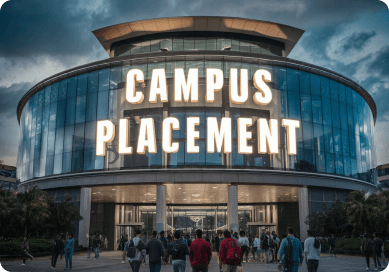
The campus recruitment system at INSA Strasbourg is highly structured, industry-integrated, and internship-driven, ensuring strong employability outcomes for students. A key feature is the centralized INSA Group Career Center platform (JobTeaser), where companies can post opportunities such as internships, graduate jobs, apprenticeships, thesis projects, and international placements. Students and recent graduates can access these listings through a dedicated portal, creating a direct bridge between recruiters and talent across the INSA network. Campus recruitment is strongly supported by mandatory internships embedded within the curriculum. Students complete multiple internships at different stages of their studies from early observation placements to advanced professional internships and final-year projects often in collaboration with partner companies. These experiences frequently lead to job offers, making internships a core pathway to employment. The institution also maintains close relationships with industry partners and corporate sponsors, who actively engage with students through presentations, workshops, and recruitment interactions. For example, companies like Hager Group collaborate with the school, participate in student engagement activities, and support specific programs, strengthening recruitment pipelines.


INSA Strasbourg has achieved several notable milestones that highlight its academic excellence, innovation, and international recognition. In 2003, the institution became part of the prestigious INSA Group, strengthening its national standing within one of France’s leading engineering education networks. It gained further recognition in 2009 when it was ranked among the top engineering schools in France by L’Étudiant, reflecting its strong academic performance. The launch of the DeutschINSA bilingual programme in 2008 marked an important achievement in cross-border education, promoting Franco-German collaboration. Throughout the 2010s, INSA Strasbourg’s engineering programmes received accreditation from the Commission des Titres d’Ingénieur (CTI) and the prestigious EUR-ACE label, ensuring high-quality standards and international recognition. The institution is also uniquely distinguished as the only engineering school in France offering a full architecture degree, further enhancing its academic profile. In 2024, the INSA Strasbourg Foundation received the OARA “Management of Innovation” award for its work on a myoelectric prosthesis project, demonstrating excellence in applied research and innovation, while students also participated in global competitions such as WorldSkills 2024. More recently, in 2025, the launch of the PARI research and training chair marked progress in sustainable materials and innovation. Overall, these achievements reflect INSA Strasbourg’s consistent development in academic quality, international collaboration, and research excellence, along with strong graduate employability and industry recognition.


The INSA Strasbourg Foundation received the “Management of Innovation” award for developing an innovative myoelectric prosthesis project, highlighting applied research excellence.
Students participated in WorldSkills 2024 and other innovation competitions, showcasing technical excellence and international competitiveness.
Engineering programmes received the EUR-ACE® label, a prestigious European accreditation ensuring high-quality engineering education aligned with international standards.
All engineering programmes are accredited by the Commission des Titres d’Ingénieur (CTI), confirming national and international recognition of degrees.
The institution was ranked 7th among 67 French engineering schools offering five-year programmes, highlighting its academic excellence and national standing.
INSA Strasbourg has developed a strong portfolio of innovation, research, and development initiatives focused on engineering, technology, and societal challenges. A major milestone was in 1994, when the institution became one of the first in France to introduce a mechatronics engineering programme, pioneering interdisciplinary innovation combining mechanics, electronics, and computing, with practical R&D outputs such as robotics systems, drones, and autonomous vehicles. In 2002, it launched long-running drone development projects, where students and researchers collaborated on designing and prototyping unmanned systems, reflecting early adoption of applied robotics innovation.
In 2013, the creation of the ICube Laboratory marked a significant advancement, bringing together research in robotics, data science, imaging, and engineering systems under a large collaborative research structure involving institutions like CNRS and the University of Strasbourg. In 2019, INSA Strasbourg participated in major cross-border research initiatives under the “Offensive Sciences” programme, securing over €820,000 in funding for applied research projects contributing to regional innovation and scientific excellence.
Expansion of industry-collaborative research projects, where students and faculty work on real-world engineering challenges such as product design, process optimization, and sustainable technologies.
Ongoing R&D in energy-efficient buildings, renewable energy systems, climate change solutions, robotics, and photonics, reflecting a focus on sustainable engineering and Industry 4.0.
Creation of the ICube Laboratory, a major research unit in collaboration with CNRS and the University of Strasbourg, advancing work in robotics, data science, imaging, and engineering systems.
Strengthening of research through units such as AMUP (architecture, urbanism, planning) and Institut Charles Sadron, focusing on materials science, urban development, and sustainability.
The institution initiated drone and autonomous systems projects, focusing on design, prototyping, and applied robotics research.

Embark on your educational journey with confidence! Our team of admission experts is here to guide you through the process. Book a free session now to receive personalized advice, assistance with applications, and insights into your dream school. Whether you're applying to college, graduate school, or specialized programs, we're here to help you succeed.

We use cookies to improve your experience, personalize content, and analyze traffic. By clicking 'Accept All,' you agree to our use of cookies.