
Media University of Applied Sciences

Berlin, Germany

Media University of Applied Sciences (MU) is a private, state-recognised university in Germany specialising in media, communication, design, management, business, psychology and humanities. Founded in 2008 as HMKW University of Applied Sciences for Media, Communication and Business, it adopted the name Media University of Applied Sciences in 2024.
Add to compare
1

Tuition Fees, Cost of Living & Accommodation at Media University of Applied Sciences

Bachelors

  • € 28440
  • € 28440
  • € 28440
  • € 28440

Masters

  • € 21360
  • € 21360
  • € 21360
  • € 21360

Media University of Applied Sciences Departments

  • Department of Design
  • Department of Management and Business Studies
  • Department of Journalism and Communication
  • Department of Psychology
  • Department of Humanities

Unique Selling Proposition (USP) of Media University of Applied Sciences

The key USP of Media University of Applied Sciences is its strong combination of academic education and practical, industry-oriented learning in media-related fields. The university offers small study groups and close individual supervision, while its programmes integrate real-world projects, case studies, modern media technologies and interdisciplinary collaboration across design, journalism and communication, management, psychology and humanities. Its campuses in Berlin, Cologne and Frankfurt place students close to Germany’s major media and business centres, while a broad cooperation network provides opportunities for internships, practical projects, guest lectures, mentoring and employment.

View More

Distinguished Alumni of Media University of Applied Sciences

Infrastructure & Facilities at Media University of Applied Sciences

Media University of Applied Sciences provides practice-oriented, media-focused infrastructure across its three campuses in Berlin, Cologne and Frankfurt am Main. The university’s facilities include fully equipped TV studios, sound and podcast studios, photography and print studios, Mac rooms, professional audiovisual equipment and technology-lending services, allowing students to work on film, photography, audio, broadcasting and digital-media projects. The TV studios support multi-camera productions, green-screen work, studio photography, podcast and radio recordings, as well as live streaming. The Berlin campus includes a TV studio, Mac room, print and photo studio and student lounges, while the Cologne campus additionally offers TV and sound studios, Mac rooms, a print and photo studio, library, kitchen, lounges, outdoor areas and roof terraces. The Frankfurt campus provides modern Mac rooms, a TV and photography studio, professional media equipment and student lounges. Students also have access to university libraries containing specialist books, academic publications, e-books and databases, supporting independent study and research. Overall, the infrastructure is designed to combine academic learning with hands-on experience and professional media production, preparing students for careers in media, communication, design, business and related creative industries. 

View More

Media University of Applied Sciences Student Life

Student life at the Media University of Applied Sciences is strongly shaped by its creative, media-oriented and practice-based environment across the Berlin, Cologne and Frankfurt campuses. Students have opportunities to interact with classmates and lecturers through university events, interdisciplinary projects, workshops, exhibitions, guest lectures and networking activities. In 2026, the university’s matriculation ceremonies included networking opportunities and activities organised with the AStA (General Students’ Committee), which also provides opportunities for students to become involved in campus initiatives and events. Students regularly participate in practical media activities such as radio and podcast production, photography, film and television projects, design exhibitions and journalism projects. For example, Cologne students have produced radio programmes for Radio Köln, participated in TV-production experiences and presented their creative work at semester exhibitions. The university also hosts workshops and interdisciplinary events, including AI, design, communication and innovation activities, giving students opportunities to collaborate beyond their individual programmes. Outside the classroom, the three campus locations provide access to vibrant urban environments: Berlin offers a diverse creative and international atmosphere, Cologne is a major media and entertainment centre, and Frankfurt provides a strong business and cultural environment. Overall, student life combines academic learning, creative collaboration, practical media experience, networking and social interaction, giving students opportunities to build both professional skills and lasting connections.


View More

Media University of Applied Sciences Career support

Media University of Applied Sciences has a strong career and campus recruitment system through its dedicated Career Service and extensive network of industry partners. The Career Service helps students find mandatory internships, working-student positions, traineeships and entry-level jobs, while also providing support with CVs, application documents and interview preparation. All classic bachelor’s programmes include a six-month compulsory internship, giving students practical industry experience before graduation. The university’s cooperation network connects students with companies through real-world projects, internships, guest lectures, workshops, mentoring and networking opportunities. Its dual-study programmes also allow students to combine academic study with employment at a cooperating company. 

View More

Step-by-Step Guide to Admission Requirements at Media University of Applied Sciences

1. International students applying for a Bachelor’s degree at Media University of Applied Sciences must generally hold a recognised university entrance qualification equivalent to the German Abitur or Fachhochschulreife (Fachabitur).

2. Applicants should complete the university’s online application and submit a CV, latest school certificate and certified evidence of their higher education entrance qualification.

3. For qualifications obtained outside Germany, an official recognition/equivalence certificate may be required through the appropriate German authority, Uni Assist or another recognised service.

4. There is no Numerus Clausus (NC); admission is based on the university’s internal selection procedure.

5. International applicants whose school qualification is not considered equivalent to the required German university entrance qualification may need to complete a one year Studienkolleg (preparatory course) and pass the final assessment examination.

6. The required Studienkolleg subject area depends on the chosen Bachelor’s programme.

7. Language requirements depend on the programme. Most German taught Bachelor’s programmes require German at B2 level, while the B.A. Journalism and Corporate Communication programme requires C1 German.

8. The B.A. Graphic Design and Visual Communication programme in Berlin is taught in English and requires B2 English.

9. For Graphic Design and Visual Communication, applicants are also expected to submit a portfolio of their own creative work; the university recommends around 10 15 works demonstrating visual communication skills and creative development. 

Know more
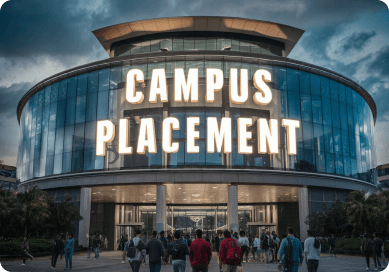
Campus
Recruitment By top Companies

Media University of Applied Sciences has a strong career and campus recruitment system through its dedicated Career Service and extensive network of industry partners. The Career Service helps students find mandatory internships, working-student positions, traineeships and entry-level jobs, while also providing support with CVs, application documents and interview preparation. All classic bachelor’s programmes include a six-month compulsory internship, giving students practical industry experience before graduation. The university’s cooperation network connects students with companies through real-world projects, internships, guest lectures, workshops, mentoring and networking opportunities. Its dual-study programmes also allow students to combine academic study with employment at a cooperating company. 

View More

    Media University of Applied Sciences Corporate Partnership

    • Notable examples include collaborations and projects involving Google Future Workshop, Axel Springer, WDR, ZDF, Sony, Deutsche Welle, DEUTZ AG, RTL Deutschland, BVG, Schindler Germany, C4 Berlin and Inno2grid.

    Notable Achievements of Media University of Applied Sciences

    Media University of Applied Sciences has received and contributed to several notable awards and achievements in recent years. In 2022, alumnus Mike Terry received an award at the Earth Futures Festival for his documentary ROLA. In 2023, five Media University design students and alumni Anan Mahmoud, Fiona Bootz, Justus Krüger, Tamara Orlovsky and Olivia Steinhauer received prizes in the prestigious ADC Talent Award, selected from 598 entries. In 2024, design graduate Felicia Usinto received an ADC Talent Award for her bachelor’s thesis Creative Divide. The year 2024 also marked an important institutional milestone when HMKW University of Applied Sciences for Media, Communication and Business was renamed Media University of Applied Sciences, accompanied by expanded international orientation, new study formats and stronger links with industry and emerging technologies. In 2025, the university recognised outstanding academic work through its Berlin graduation awards, including Max Landerer for a master’s thesis on responsible healthcare AI, Elias Jakob for a bachelor’s thesis analysing journalistic coverage of the Ukraine war, and Natalia Zapata for a master’s thesis examining female reporters working in conflict zones. The university also maintains state recognition and institutional accreditation, while its degree programmes undergo recognised academic accreditation, reflecting its commitment to quality and academic standards.

    View More

    Achievements

    01.
    Best Thesis Recognition

    At the Berlin graduation ceremony, Max Landerer received the prize for the best Master's thesis in Psychology for research on responsible healthcare AI, while Elias Jakob received the best Bachelor's thesis award in Journalism and Communication. Natalia Zapata was also recognised for an outstanding Master's thesis in Digital Journalism.

    Year
    2025
    02.
    Institutional Rebranding

    HMKW University of Applied Sciences for Media, Communication and Business officially became Media University of Applied Sciences, marking a major development in its institutional and internationalisation strategy.

    Year
    2024
    03.
    Programme and Industry Development

    Following the rebranding, the university strengthened its cooperation with media-industry partners and expanded its portfolio of practice-oriented programmes and emerging-technology fields.

    Year
    2024

    Notable Innovation, Research & Development Media University of Applied Sciences

    Media University of Applied Sciences has increasingly focused its research and development activities on artificial intelligence, digital media, immersive technologies, creative industries and the social impact of emerging technologies. In 2023, the university introduced the M.A. Artificial Intelligence and Societies, combining AI with fields such as computer science, psychology, anthropology, journalism, design, film and photography. In 2024, its innovation activities expanded into AI-supported graphic design, AI cinematography, photography, virtual reality, immersive storytelling and digital cultural heritage. In 2024–2026, students and researchers also participated in practice-oriented projects with industry partners, applying academic knowledge to communication, journalism and digital-media challenges. In 2026, the university further developed this direction through the M.A. Artificial Intelligence, Education, Technology and Innovation, exploring applications such as VR/AR, AI agents, chatbots, virtual classrooms, avatars and immersive learning environments. Together, these initiatives demonstrate the university’s commitment to applied research, technological innovation and the development of new solutions for media, education and creative industries.

    View More

    Notable Innovation

    01.
    AI, Education and Immersive Learning

    The university further developed its AI portfolio through the M.A. Artificial Intelligence, Education, Technology and Innovation, integrating AI with VR/AR, chatbots, agentic AI, virtual classrooms, avatars, humanoid robotics and immersive learning environments.

    Year
    2026
    02.
    AI, VR and Creative Industries

    The university expanded its AI-oriented academic development to include research and teaching in AI-driven graphic design, AI cinematography, AI-supported photography, immersive storytelling, virtual reality and cultural heritage reconstruction.

    Year
    2024
    03.
    Innovation and Development Programme

    Following its rebranding from HMKW to Media University of Applied Sciences, the university launched a broader innovation and development programme, with particular emphasis on internationalisation, new study formats and emerging technologies such as machine learning and artificial intelligence.

    Year
    2024

    Explore Programs & Courses at Media University of Applied Sciences

    Program name
    Tuition Fees
    Deadlines
    BA Graphic Design and Visual Communication 3 Years On Campus Bachelors Program
    €9480
    31st Jul
    (April)

    Connect With Media University of Applied Sciences

    • Media University of Applied Sciences Ackerstraße 76 (staircase A, 2nd and 3rd floor) 13355 Berlin
    • +49 (0)30/4677693-00

    Book Free Session with Our Admission Experts

    Admission Experts