
Hochschule Stralsund

Stuttgart, Germany

Hochschule Stralsund, also known as Stralsund University of Applied Sciences (HOST), is a public university of applied sciences located in the historic Baltic Sea city of Stralsund, Germany. Established in 1991 after German reunification, the university has developed a strong reputation for practice-oriented education, modern research.
Add to compare
1

Tuition Fees, Cost of Living & Accommodation at Hochschule Stralsund

Hochschule Stralsund Departments

  • School of Electrical Engineering and Computer Science
  • School of Mechanical Engineering
  • School of Business Studies

Unique Selling Proposition (USP) of Hochschule Stralsund

The main USP of Hochschule Stralsund is its combination of practice-oriented education, strong industry collaboration, modern technical programs, and a unique Baltic Sea campus environment. The university is especially recognized for providing career-focused education in engineering, technology, business, renewable energy, and tourism while maintaining a highly personalized learning atmosphere. One of the university’s biggest strengths is its excellent student-to-faculty ratio, which allows students to receive close academic guidance, individual mentoring, and hands-on practical training. Unlike large German universities with overcrowded lecture halls, Hochschule Stralsund offers smaller classes and direct interaction with professors and researchers. Another major USP is its strong industry integration and applied learning approach. The university collaborates closely with regional and international companies, enabling students to participate in internships, research projects, dual-study programs, and real-world industrial applications. 

View More

Infrastructure & Facilities at Hochschule Stralsund

Hochschule Stralsund has a modern and well-equipped infrastructure designed to support practical learning, applied research, and student life. The university operates a compact campus near the Baltic Sea where academic buildings, laboratories, student housing, sports facilities, and recreational areas are located within walking distance. The campus infrastructure is especially strong in engineering, information technology, renewable energy, and business studies, reflecting the university’s technical and industry-oriented profile.

The university features advanced laboratories and technical facilities across its three faculties. The Faculty of Mechanical Engineering includes specialized labs for additive manufacturing, robotics, vehicle technology, fluid mechanics, Industry 4.0, cleanroom technology, production engineering, aerodynamics, welding technology, and 3D printing. Students have access to modern industrial equipment such as KUKA robots, CNC machines, wind tunnels, CAD/CAM systems, ANSYS simulation software, laser measurement systems, and automated manufacturing technologies.

View More

Hochschule Stralsund Student Life

Student life at Hochschule Stralsund is shaped by a small, close-knit campus environment, strong community feel, and a unique coastal lifestyle near the Baltic Sea. Because the university is compact, students quickly get to know each other and build strong academic and social networks across different programs and faculties.

A major part of student life revolves around the campus experience, where lectures, laboratories, library study spaces, cafeteria (Mensa), and student services are all located within walking distance. This makes daily life convenient and encourages frequent interaction between students and professors. The university also promotes project-based learning, so students often work together on practical assignments, research projects, and innovation challenges.

Outside academics, students actively participate in clubs, events, and sports activities. The university is well known for its motorsport and engineering teams, such as Baltic Racing, where students design and build racing cars. There are also water-based activities like sailing, rowing, and dragon boat racing, which are popular due to Stralsund’s coastal location. Cultural events, student parties, international evenings, and faculty festivals are regularly organized on and around campus.

View More

Hochschule Stralsund Career support

Hochschule Stralsund has a strong campus recruitment and industry collaboration system that focuses on practical training, internships, cooperative study programs, and career-oriented learning. The university maintains close partnerships with regional, national, and international companies, especially in engineering, IT, renewable energy, business, maritime technology, and tourism sectors. Its practice-oriented education model helps students gain real-world industry exposure during their studies.

One of the university’s major recruitment strengths is its Kooperatives Studium (Cooperative Study Program), where students combine academic learning with paid practical work experience in partner companies. Students work with companies during semester breaks and sometimes alongside their coursework, allowing them to build professional experience before graduation. In many programs, internships and thesis projects are completed directly within partner industries. 

View More

Step-by-Step Guide to Admission Requirements at Hochschule Stralsund

1. For most bachelor’s programs taught in German, applicants must demonstrate German language proficiency, usually at the B2 or C1 level depending on the program.

2. Accepted certificates include DSH, TestDaF, Goethe Zertifikat, DSD, and equivalent qualifications.

3. For English taught or partially English taught programs such as International Management Studies in the Baltic Sea Region (BMS), students must provide English proficiency at B2 level or higher through exams such as IELTS (minimum 6.0), TOEFL, Cambridge certificates, or equivalent qualifications.

4. Applicants are generally required to submit documents including academic transcripts and certificates, a passport copy, a tabular CV/resume, passport sized photo, and proof of language proficiency.

5. Students who have previously attended another university must also provide transcripts and deregistration certificates if applicable. Applications from international students are usually processed through the Uni Assist platform before being forwarded to Hochschule Stralsund for final evaluation. 

Know more
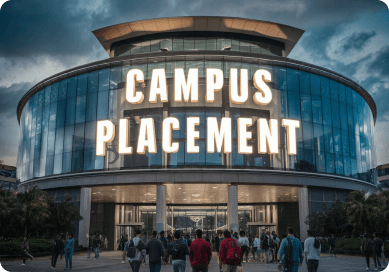
Campus
Recruitment By top Companies

Hochschule Stralsund has a strong campus recruitment and industry collaboration system that focuses on practical training, internships, cooperative study programs, and career-oriented learning. The university maintains close partnerships with regional, national, and international companies, especially in engineering, IT, renewable energy, business, maritime technology, and tourism sectors. Its practice-oriented education model helps students gain real-world industry exposure during their studies.

One of the university’s major recruitment strengths is its Kooperatives Studium (Cooperative Study Program), where students combine academic learning with paid practical work experience in partner companies. Students work with companies during semester breaks and sometimes alongside their coursework, allowing them to build professional experience before graduation. In many programs, internships and thesis projects are completed directly within partner industries. 

View More

    Hochschule Stralsund Corporate Partnership

    • Another long-term example is the collaboration between Hochschule Stralsund and the Berlin-based IT company Projektron GmbH. Since 2002/03, the partnership has supported teaching, software-based project management training, student projects, and thesis supervision in business informatics and IT management.

    Notable Achievements of Hochschule Stralsund

    Hochschule Stralsund has received several notable awards and achievements in recent years that highlight its academic quality and regional impact. In 2021, the university reached an important milestone by surpassing 10,000 successful graduates, reflecting its steady growth and strong role in producing skilled professionals in engineering, business, and IT fields. In the same year, outstanding academic performance was recognized through the Studienpreis of the Hansestadt Stralsund, awarded to exceptional graduates for excellence in thesis work and research contributions. In 2024, the university collaborated with the City of Stralsund to launch the “Zukunftspreis” (Future Award), which honors innovative ideas and projects that contribute to sustainability, digital transformation, and regional development. Also in 2024, Hochschule Stralsund supported high-achieving students through the Deutschlandstipendium scholarships, which reward both academic excellence and social engagement while being backed by industry partners. By 2025, the Zukunftspreis initiative had become an established platform promoting innovation, startups, and collaboration between students, researchers, companies, and the city administration, further strengthening the university’s role as a hub for applied research and regional innovation.

    View More

    Achievements

    01.
    “Zukunftspreis” (Future Award)

    In 2024, the university collaborated with the City of Stralsund to launch the “Zukunftspreis” (Future Award), which honors innovative ideas and projects that contribute to sustainability, digital transformation, and regional development.

    Year
    2024
    02.
    Deutschland stipendium scholarships

    Also in 2024, Hochschule Stralsund supported high-achieving students through the Deutschland stipendium scholarships, which reward both academic excellence and social engagement while being backed by industry partners.

    Year
    2024

    Notable Innovation, Research & Development Hochschule Stralsund

    Hochschule Stralsund has been involved in several notable research and development projects across energy, digitalization, and industrial innovation over the years. Between 2014 and 2017, the Baltic DigiTour project focused on digital tourism education in the Baltic Sea region by developing online learning platforms and training systems for tourism professionals. From 2015 to 2018, the OpenC³S / INSPECTIO initiative worked on cybersecurity and IT governance, aiming to strengthen secure enterprise systems, cloud security, and automated compliance monitoring. During 2016 to 2019, the Metha-Cycle project explored renewable energy storage by converting surplus renewable electricity into methanol and later reconverting it into usable energy, supporting long-term green energy storage solutions. From 2017 to 2020, the Productive4.0 project addressed Industry 4.0 innovations by developing AI-supported and flexible smart manufacturing systems in collaboration with European partners. Between 2018 and 2023, the CAMPFIRE project focused on green hydrogen and ammonia-based fuels for maritime use, investigating carbon-free fuel alternatives for shipping and energy storage. Since 2020, the ongoing ArtIFARM project has been applying artificial intelligence and sensor-based technologies to improve smart farming and agricultural efficiency in the Mecklenburg-Vorpommern region. In 2020–2021, the SeLma4.0 project advanced research in metal additive manufacturing using selective laser melting for industrial and medical applications. Most recently, from 2021 to 2024, the 5G-PortVG project developed 5G-enabled smart port logistics systems to enhance automation, real-time communication, and efficiency in maritime transport.

    View More

    Notable Innovation

    01.
    The ArtIFARM project

    The ArtIFARM project works on artificial intelligence in agriculture. It develops smart farming systems using sensors, data analytics, and AI tools to improve agricultural productivity and sustainability in the Mecklenburg-Vorpommern region.

    Year
    2020
    02.
    The SeLma4.0 project

    The SeLma4.0 project focused on advanced metal 3D printing using selective laser melting technology. It contributed to research on lightweight components for industrial and medical applications through additive manufacturing techniques.

    Year
    2020
    03.
    The CAMPFIRE project

    The CAMPFIRE project focused on green hydrogen and ammonia-based fuels for maritime applications. It investigated how renewable energy could be used to produce green ammonia as a carbon free fuel alternative for shipping and energy storage.

    Year
    2018

    Explore Programs & Courses at Hochschule Stralsund

    Program name
    Tuition Fees
    Deadlines

    Connect With Hochschule Stralsund

    Book Free Session with Our Admission Experts

    Admission Experts