
Berlin, Germany

Berlin, Germany

Cost Of Living

Undergraduate Fees International Students

Post Graduate Fees International Students


The key USP of HSB Hochschule Bremen lies in its strong combination of international education, practical learning, and industry integration. The university is widely recognized for its globally oriented study programs, with around 60–70% of courses having an international focus and partnerships with nearly 360 universities across about 70 countries. HSB emphasizes applied sciences and hands-on experience, allowing students to work on real-world projects, internships, and industry-linked thesis work during their studies. Its close collaboration with more than 200 companies and organizations, along with dual-study opportunities, enhances employability and career readiness. The university is also known for interdisciplinary education in areas such as sustainability, digitalization, AI, mobility, logistics, health, and urban development, making its programs highly future-focused. Additionally, HSB’s participation in the EU-funded STARS EU alliance strengthens its international reputation and research opportunities.
Alumna of Civil Engineering (B.Sc.) who later became State Councillor for Environment, Climate and Science in Bremen. Sh... View More
Alumna of Civil Engineering (B.Sc.) who later became State Councillor for Environment, Climate and Science in Bremen. She is recognized for her contributions to environmental and urban policy in Germany. View Less
Graduate of Politics Management who works in the Senate Chancellery of the Free Hanseatic City of Bremen, focusing on de... View More
Graduate of Politics Management who works in the Senate Chancellery of the Free Hanseatic City of Bremen, focusing on development policy and educational initiatives. He is also active in local political leadership and civic engagement. View Less
Aerospace engineering alumna currently working with ArianeGroup in Bremen. She is also involved in mentoring students th... View More
Aerospace engineering alumna currently working with ArianeGroup in Bremen. She is also involved in mentoring students through the Airbus Café initiative at HSB. View Less
Graduate in Aerospace Engineering who works at Airbus Defence and Space in Manching. He actively supports innovation pro... View More
Graduate in Aerospace Engineering who works at Airbus Defence and Space in Manching. He actively supports innovation projects, industrial collaborations, and student mentoring at HSB. View Less
Business administration alumna recognized for her successful career in taxation and finance. Her professional journey wa... View More
Business administration alumna recognized for her successful career in taxation and finance. Her professional journey was highlighted in regional German media under the title “The Path of a Power Woman.” View Less
Electronics Engineering graduate who won the VDE Study Award for outstanding academic performance and engineering innova... View More
Electronics Engineering graduate who won the VDE Study Award for outstanding academic performance and engineering innovation. View Less
Recipient of the Bremen Engineering Prize 2025 for innovative welding technology research in aircraft manufacturing.
The infrastructure of Hochschule Bremen is modern, practice-oriented, and spread across multiple specialized campuses in the city of Bremen, giving students access to strong academic, research, and industry linked facilities. HSB operates across four main campuses, each designed for specific disciplines: Campus Neustadtswall (main hub for engineering, architecture, and sciences), Campus Werderstraße (business, maritime studies, and simulation systems, Campus Airportstadt, and Campus Am Brill. This distributed structure connects students directly with real-world industries and city environments. The university provides well equipped laboratories and research centers, especially in engineering fields. These include facilities such as BIM-GIS labs, geotechnics labs, building materials and hydraulics laboratories, transport and urban planning labs, hydrogen economy labs, and environmental biotechnology labs, supporting applied research and hands-on learning.
Student life at HSB Hochschule Bremen is diverse, international, and city-integrated, since the university is spread across Bremen and strongly connected to everyday city life. Students experience a balanced mix of academic and social life. On campus, there are active opportunities for sports, cultural activities, student clubs, and creative projects, helping students build friendships and stay engaged outside lectures. The university also encourages participation in student committees, volunteering projects, sustainability groups, and initiatives like “Rent a Student,” where students share their study experience with newcomers. A big part of student life is the urban experience of Bremen itself. Students often live in shared flats (WGs) or student housing, with neighborhoods like Neustadt being close to campus and popular among students. Living costs are relatively moderate compared to other German cities, and the city offers cafés, cultural events, and relaxed nightlife, making it suitable for both focused study and social life.


HSB Hochschule Bremen has a strong practice-oriented approach to campus recruitment and career development. The university operates a dedicated Career Service that supports students with internships, job placements, workshops, career counseling, CV preparation, networking events, and employer connections through its “Career Gate” job portal.
HSB maintains close collaborations with around 180 companies through its dual-study and industry-integrated programs, enabling students to gain practical experience while studying. Companies regularly participate in recruitment activities, career events, employer presentations, and networking sessions organized on campus. The university also hosts initiatives such as “Starting Your Career in Germany,” “Easy CV,” and recruitment-focused workshops where employers interact directly with students and graduates.
The below information is required while
completing the university application :
1. To apply for a bachelor’s degree at HSB, international students must first have a recognized university entrance qualification from their home country. If your school certificate is from outside Germany, you usually need a VPD issued by uni assist before applying to HSB. This confirms whether your qualification is valid for admission in Germany.
2. You must also submit an application through HSB’s online portal (CampInO) after receiving the VPD. For most programs, applications are done for either the winter semester (June 1 to July 15) or summer semester (December 15 to January 15).
3. In addition, you need to provide standard academic documents such as school leaving certificates, transcripts, CV, and sometimes a motivation letter. Some degree programs may also require a pre study internship, aptitude test, or specific subject background depending on the course.
4. For language requirements, German taught programs require proof of German proficiency such as TestDaF, DSH 2/DSH 3, Goethe C1/C2, or telc C1 Hochschule, while English taught programs require English proficiency.
5. Finally, after receiving admission, students must complete enrolment steps including health insurance proof, passport copy, semester fee payment, and residence/visa related documents before starting studies.
Know moreHSB Hochschule Bremen has a strong practice-oriented approach to campus recruitment and career development. The university operates a dedicated Career Service that supports students with internships, job placements, workshops, career counseling, CV preparation, networking events, and employer connections through its “Career Gate” job portal.
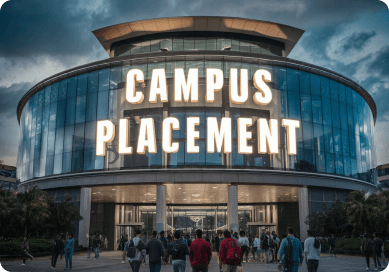
HSB maintains close collaborations with around 180 companies through its dual-study and industry-integrated programs, enabling students to gain practical experience while studying. Companies regularly participate in recruitment activities, career events, employer presentations, and networking sessions organized on campus. The university also hosts initiatives such as “Starting Your Career in Germany,” “Easy CV,” and recruitment-focused workshops where employers interact directly with students and graduates.


HSB students received multiple awards in Bremen’s leading student startup competition for innovative business ideas and entrepreneurial projects.
HSB’s Bionics team won this award for outstanding biomimetic engineering design and innovation in applied 3D development.
HSB Hochschule Bremen has built a strong reputation in applied research and innovation, especially in aerospace, satellite systems, sustainability, and digital engineering. Key developments include the VIBES “digital satellite” program (since 2021), which focuses on building next-generation CubeSats with industry and student collaboration, and the AQUASONIC II experimental rocket project (2013–2016) developed under Germany’s STERN initiative for high-altitude testing and propulsion research. The university is also involved in major European R&D projects such as ASCenSIon (2020–present) on reusable space launch systems and TRUSPACE (2024–2030) for secure, AI-driven satellite communication. Alongside aerospace work, the Bionik Innovation Centre (since 2005) contributes to biomimetic engineering, while ongoing research in AI and sustainability supports energy-efficient and future-oriented industrial technologies.
In 2025, HSB’s Institute of Aerospace Technology received €3.8 million in funding for the “BreSpaceTech 2025+” project. The initiative focuses on sustainable aerospace technologies, including environmentally friendly rocket propulsion systems, advanced testing laboratories, and long-lasting digitally maintainable satellites.
HSB is involved in the TRUSPACE project, which develops trustworthy and energy-efficient satellite communication systems using AI-based signal processing and secure open hardware architectures. The project supports Europe’s technological sovereignty in future satellite communications.
HSB researchers and collaborators have contributed to studies connecting artificial intelligence with sustainability, aerospace systems, renewable energy, and climate-related technologies. These projects analyze how AI can improve sustainable engineering, energy efficiency, and future industrial systems.
HSB participated in the European Union Horizon 2020 project “ASCenSIon” (Advancing Space Access Capabilities – Reusability and Multiple Satellite Injection). The research focuses on reusable and sustainable launch systems for Europe’s future space missions. HSB specifically contributed research on electric pump-fed propulsion technologies for rocket upper stages.
Through the German Aerospace Center’s STERN program, HSB students and researchers developed the reusable experimental rocket “AQUASONIC II.” The rocket was designed to transport payloads to high altitudes while breaking the sound barrier with speeds around Mach 1.2. The project gave students hands-on experience in real aerospace system development.
The Bionik Innovation Centre at HSB has coordinated biomimetics research since 2005. Researchers study biological systems and transfer natural principles into engineering and industrial applications. Projects focus on sustainable product development, fluid simulation, aerospace technologies, and environmentally friendly engineering systems.

Embark on your educational journey with confidence! Our team of admission experts is here to guide you through the process. Book a free session now to receive personalized advice, assistance with applications, and insights into your dream school. Whether you're applying to college, graduate school, or specialized programs, we're here to help you succeed.

We use cookies to improve your experience, personalize content, and analyze traffic. By clicking 'Accept All,' you agree to our use of cookies.