Munich, Germany

Munich, Germany

Cost Of Living

The Unique Selling Proposition (USP) of Munich University of Applied Sciences (HM) is its strong combination of practice-oriented education, applied research, industry collaboration, entrepreneurship, and internationalisation. As one of Germany’s largest and most diverse universities of applied sciences, HM offers education across engineering, business, social sciences, design, and other disciplines, with programmes designed around real-world professional requirements. Its close cooperation with companies and social institutions gives students opportunities to undertake practical projects, internships, dual-study programmes, and industry-linked learning. HM also has a particularly strong entrepreneurial ecosystem through its Strascheg Center for Entrepreneurship, supporting students and researchers in developing innovative ideas and start-ups. Its location in Munich—one of Europe's major economic and technology hubs—further strengthens access to employers, research partners, and innovation networks. Overall, HM's distinctive strength is its ability to connect academic knowledge directly with professional practice, applied innovation, entrepreneurship, and international career opportunities.
German politician and President of the European People's Party (EPP). He is a Member of the European Parliament and has ... View More
German politician and President of the European People's Party (EPP). He is a Member of the European Parliament and has served as leader of the EPP Group in the European Parliament since 2014. View Less
German business executive who served as CEO of Volkswagen AG from 2015 to 2018. He previously served as CEO of Porsche a... View More
German business executive who served as CEO of Volkswagen AG from 2015 to 2018. He previously served as CEO of Porsche and held senior positions in the automotive industry. View Less
German business executive and former CEO and Chairman of BMW AG. He is recognized for his leadership in the global autom... View More
German business executive and former CEO and Chairman of BMW AG. He is recognized for his leadership in the global automotive industry. View Less
Renowned German industrial designer and lighting designer, internationally recognized for his innovative lighting design... View More
Renowned German industrial designer and lighting designer, internationally recognized for his innovative lighting designs and creative approach to product design. View Less
Internationally acclaimed German photographer, known for his fashion photography, portraiture, and collaborations with m... View More
Internationally acclaimed German photographer, known for his fashion photography, portraiture, and collaborations with major fashion brands and cultural figures. View Less
Prominent German painter and graphic artist, known particularly for his abstract works and experiments with colour and g... View More
Prominent German painter and graphic artist, known particularly for his abstract works and experiments with colour and geometric forms. View Less
German alpine ski racer and former World Cup competitor, representing Germany in international skiing competitions.
Munich University of Applied Sciences (HM) has a multi-campus infrastructure distributed across three main locations in Munich: Lothstraße, Karlstraße, and Pasing. Each campus has its own library and canteen, while the university's buildings provide lecture halls, seminar rooms, laboratories, computer facilities, study spaces, administrative offices, and student services.
The Lothstrabe Campus is HM's largest site, with around 12,500 students. It houses nine departments along with the central administration, university library, CAREER Centre, E-Learning Center, Centre for Continuing Education, and Cooperation and Transfer facilities. Engineering and technology departments have specialized laboratories and technical teaching facilities; for example, the Department of Applied Sciences and Mechatronics has its lecture halls, laboratories, and offices across several buildings on the campus.
Student life at Munich University of Applied Sciences (HM) combines academic study with sports, cultural activities, student organizations, international events, entrepreneurship, and social engagement. Students can participate in the International Club, which organizes weekly get-togethers, affordable social events, hiking, weekend trips, cultural excursions, game and karaoke nights, and activities such as rafting and bouldering.
HM also offers a wide range of university sports, including team sports, climbing, fitness, dance, yoga, and other recreational activities. Students can take advantage of Munich's wider leisure opportunities, including parks, the Isar River, museums, festivals, Christmas markets, and outdoor activities in the nearby Alps.
International students are an important part of campus life. HM provides orientation programmes, mentoring, intercultural activities, summer schools, and Internationalisation@Home initiatives, allowing students to interact with peers from different countries without necessarily studying abroad. The university also has more than 290 partner universities in over 60 countries, supporting a diverse international environment.


Munich University of Applied Sciences (HM) has a strong campus recruitment and career-development system connecting students and graduates with companies across technology, engineering, business, social sciences, design, and other fields. Its CAREER Center organizes recruitment fairs, company presentations, networking events, practical training days, application workshops, and career counselling, while the central Hochschuljobbörse provides students with internships, part-time positions, graduate jobs, and entry-level opportunities.
HM's recruitment programme includes events such as CampusConnect@HM Business School Career Match, Energy Networks, the VHK Career Forum for Construction, and HOKO University Fair. Companies can meet students directly, offer internships, working-student positions, final-year projects, and graduate jobs, and strengthen their employer branding through university events.
The university also facilitates direct interaction with employers through company workshops and networking events. Recent participating employers and organizations include Infineon Technologies AG, Deutsche Vertriebsberatung GmbH, TRIFAM, Formaxx AG, and DB InfraGO AG. The university's job portal also features employers such as SSI Schäfer Automation, Implenia, Haas Fertigbau, 3CON Anlagenbau, and ING Deutschland.
The below information is required while
completing the university application :
1. Recognized secondary school qualification: School leaving certificate/diploma equivalent to the German university entrance qualification.
2. Academic documents: Scanned copies of school certificates and, where applicable, university transcripts.
3. Certified translations: Documents must be accompanied by certified translations into German or English when required.
4, VPD from uni assist: Applicants with foreign qualifications generally need to obtain the preliminary assessment documentation before applying to HM.
5. APS certificate: Required for applicants from India, China, and Vietnam.
6. Passport/ID: A scanned copy of a valid passport or identity card.
7. CV: A tabular CV covering the applicant's educational background and other relevant periods.
8. Language proficiency: Most Bachelor's programmes are taught in German and require German at B2 level. The English taught Bachelor's programmes require English at B2 level. Engineering Physics and Data Science additionally requires German A2 by the end of the second semester, while International Management and Digital Engineering requires German B1 by the end of the fifth semester.
9. Pre study internship: Some programmes require a completed pre study work placement/internship before studies begin.
10. Aptitude assessment: Architecture and Design require an entrance/aptitude procedure and portfolio; Informatics and Design also has an aptitude procedure.
11. Online application: Applicants apply through the HM online application portal; programmes with restricted admission also require registration through Hochschulstart under the DoSV procedure.
12. Health insurance: After admission, students must provide electronic proof of health insurance status for enrolment.
Know moreMunich University of Applied Sciences (HM) has a strong campus recruitment and career-development system connecting students and graduates with companies across technology, engineering, business, social sciences, design, and other fields. Its CAREER Center organizes recruitment fairs, company presentations, networking events, practical training days, application workshops, and career counselling, while the central Hochschuljobbörse provides students with internships, part-time positions, graduate jobs, and entry-level opportunities.
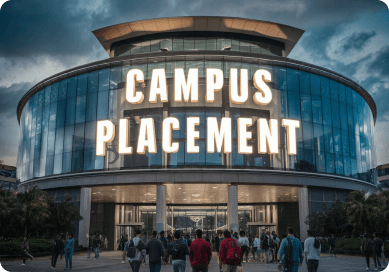
HM's recruitment programme includes events such as CampusConnect@HM Business School Career Match, Energy Networks, the VHK Career Forum for Construction, and HOKO University Fair. Companies can meet students directly, offer internships, working-student positions, final-year projects, and graduate jobs, and strengthen their employer branding through university events.
The university also facilitates direct interaction with employers through company workshops and networking events. Recent participating employers and organizations include Infineon Technologies AG, Deutsche Vertriebsberatung GmbH, TRIFAM, Formaxx AG, and DB InfraGO AG. The university's job portal also features employers such as SSI Schäfer Automation, Implenia, Haas Fertigbau, 3CON Anlagenbau, and ING Deutschland.


In 2026, HM held its 11th Oskar-von-Miller ceremony, continuing its annual recognition of excellence in teaching, research, doctoral studies, student achievements, and industry cooperation. Prof. Dr. Markus Witzmann received the 2026 Oskar for applied research in the category “Outreach – Research for and with people.”
In 2024, Prof. Dr. Stefan Wallentowitz received HM’s Oskar for Applied Research and Development for his work in computer science and research related to open RISC-V processor architecture and chip design.
In 2023, Klaus Sailer, Managing Director of HM’s Strascheg Center for Entrepreneurship (SCE), received first place in the Bavarian MöglichMacher²³ University Award for his contribution to entrepreneurship and the transformation of HM into an entrepreneurial university.
In 2023, HM’s KonTEXT reading project won the top prize in the category for young adults at the Megafon Prize, awarded by the Joachim Herz Foundation. The project was recognized for its innovative approach to language education, reading literacy, and social participation.
In 2022, Prof. Dr. Christoph Hackl received the Oskar for Applied Research for his strong research record in sustainable energy systems and energy conversion, particularly through his work at HM’s Institute for Sustainable Energy Systems.
Since 2015, Munich University of Applied Sciences (HM) has presented its annual Oskar-von-Miller Awards to recognize outstanding achievements in teaching, applied research and development, doctoral research, student degrees, and cooperation with industry. The awards reflect HM’s strong focus on practice-oriented education and research.
Munich University of Applied Sciences (HM) has a strong profile in applied research, engineering, artificial intelligence, sustainable technologies, mobility, biomedical engineering, and energy systems. Notable developments include the Laser Center’s femtosecond-laser bioprinting work in 2018, followed by the development of an all-laser interconnection process for organic solar cells in 2019 and laser-based research on nanoparticle generation in 2022–2023. From 2020–2024, HM participated in the InnoTurbinE project with MTU Aero Engines and other research partners, developing high-density fiber-optic measurement technology for sustainable turbomachinery and high-temperature turbine applications. In 2021–2024, the university also advanced research into biocementation through the MicrobialCrete project, investigating bacteria-based processes for producing calcium carbonate to stabilize construction materials and potentially create more environmentally friendly building solutions. In 2024, HM's Professor Stefan Wallentowitz received the Oskar von Miller Prize for Applied Research and Development for his work on RISC-V open processor architecture and chip design, reflecting the university's contribution to open-source semiconductor technology. HM is also developing research in AI and autonomous mobility, including safe autonomous driving for urban environments, intelligent transport systems, assistive robotics, and autonomous flight. Its IAMLIS research institute brings together expertise in machine learning and intelligent systems, while current projects address battery safety, electric mobility, digital energy systems, smart manufacturing, and sustainable buildings.
HM researchers developed resource-efficient concrete using 100% recycled aggregate, combined with biocementation and alternative reinforcement technologies. The project aims to improve the performance and sustainability of load-bearing reinforced concrete components.
In 2025, HM researchers worked on productivity enhancement in bioprocesses through machine learning, applying AI techniques to improve biological production processes.
In 2024, Prof. Dr. Stefan Wallentowitz received HM's Oskar von Miller Prize for Applied Research and Development for his research in chip design based on the open RISC-V processor architecture. His work contributed to the international RISC-V ecosystem and open processor technology.
HM researchers developed biobased construction materials using biocementation, in which bacteria help strengthen materials for building repair and other construction applications. The interdisciplinary project involved the Faculties of Engineering and Civil Engineering and three industry partners.
HM participated in InnoTurbinE, a research project focused on developing innovative turbomachinery for sustainable energy systems. HM's contribution involved developing fiber-optic probes for high-temperature measurements in gas turbines, supporting greater efficiency, fuel flexibility—including hydrogen—and reduced CO₂ emissions.
HM researchers worked on automated machine-learning methods for optimizing media used in bioprocesses. The project explored how artificial intelligence could improve the efficiency and optimization of biotechnology processes.

Embark on your educational journey with confidence! Our team of admission experts is here to guide you through the process. Book a free session now to receive personalized advice, assistance with applications, and insights into your dream school. Whether you're applying to college, graduate school, or specialized programs, we're here to help you succeed.

We use cookies to improve your experience, personalize content, and analyze traffic. By clicking 'Accept All,' you agree to our use of cookies.